

The Hidden Scars of Bullying…
How Bullying Trauma Shapes a Child’s Body, Mind, and Identity
By Monika Grace, CCTP-II, Integrative Somatic Psychotherapist, Trauma Therapist (Somatic Psychology, EMDR, IFS, SE)
Summary and Key Points:
Bullying leaves invisible imprints in the body and nervous system, not just emotional scars.
Children may carry fight, flight, or freeze responses long after the bullying ends.
These imprints can show up as anxiety, shutdown, people-pleasing, or difficulty trusting others.
True healing requires somatic approaches - restoring safety in the body, not just talking about the trauma.
With the right support, children can rebuild self-worth, confidence, and the freedom to be their authentic selves.
Introduction
When a child is bullied, the wounds run deeper than hurt feelings or temporary sadness. Bullying impacts the developing nervous system, identity, and core sense of safety in the world. For a 10-year-old boy or girl, these experiences can shape the way they see themselves, others, and life itself.
Bullying isn’t just “kids being kids.” Neuroscience and trauma research show it can have lasting effects on self-worth, brain development, and emotional regulation, leaving deep imprints that often persist into adulthood,if unaddressed.
Let’s explore what really happens inside a bullied child from multiple perspectives.
The different types of bullying and their lasting impact:
Physical Bullying
Physical bullying involves direct bodily harm or the threat of it, such as hitting, pushing, or kicking. Its impact is immediate and visceral.
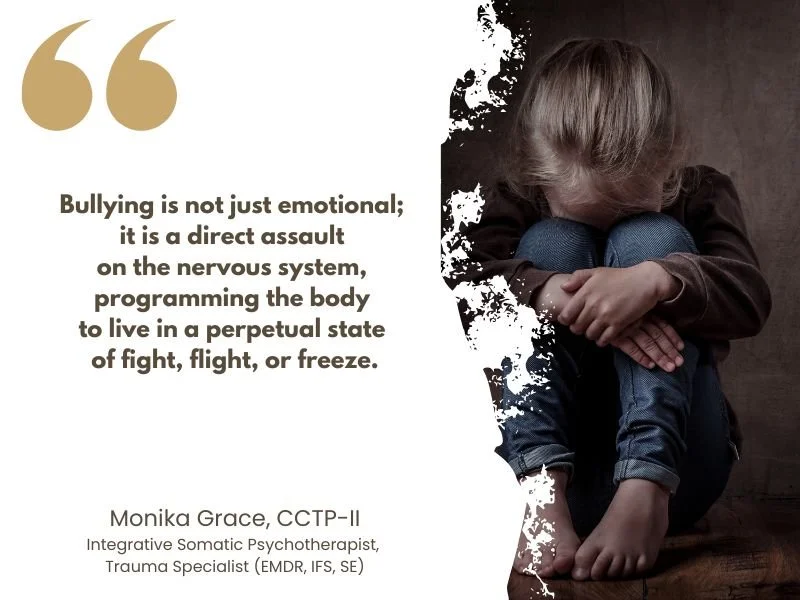
Impact on the Body: This is a primal trauma. The body's nervous system is thrown into a constant state of fight, flight, or freeze. This chronic state of hypervigilance can lead to physical ailments like stomachaches and headaches, and a lifelong tendency to live with a dysregulated nervous system.
Core Beliefs & Identity: The victim internalizes the belief that the world is a dangerous place and they are fundamentally powerless to protect themselves. Their core belief becomes, "I am unsafe," and this can lead to a pervasive sense of anxiety and a need for excessive control in later life.
Future Prospects: An individual may struggle to assert themselves in the workplace, fearing confrontation. The body's conditioned freeze response can make it difficult to be productive under pressure, leading to poor performance and an inability to thrive.
Verbal Bullying
Verbal bullying uses words as weapons, including name-calling, taunting, and insults based on appearance, beliefs, or identity.
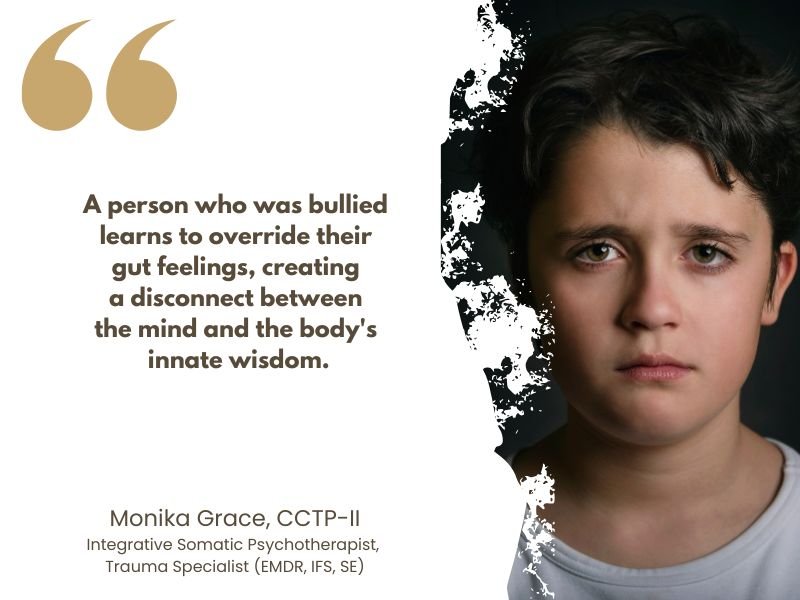
Impact on the Body: The insults are a direct attack on the core of who a child is. The nervous system can enter a subtle but constant state of freeze, as the child feels unable to fight back or run away. This is a form of somatic trauma, as the hurtful words get absorbed and stored as bodily tension.
Core Beliefs & Identity: This form of bullying directly attacks a child's sense of self-worth and self-esteem. The victim's internal dialogue is hijacked by the bully's voice, leading to a core belief of being "unlovable," "stupid," or "ugly." This can lead to a lifelong battle with self-love and self-trust.
Future Prospects: This person may struggle with imposter syndrome and perfectionism, driven by the inner critic's voice. They may fear public speaking or taking risks in their career, constantly worried about being "found out" or judged. Their productivity can be crippled by fear.
Relational & Social Bullying
This is often a covert and insidious form of bullying. It involves social exclusion, spreading rumors, and manipulating relationships to isolate a target.
Impact on the Body: As a social species, we are hard-wired for connection. Relational bullying triggers the same neurobiological pain response as a physical injury. The feeling of being ostracized creates a profound sense of loneliness and rejection.
Core Beliefs & Identity: This type of bullying directly shatters a child's sense of belonging. The core belief becomes, "I am unworthy of connection," or "I am flawed and deserve to be alone." This severely impacts the ability to form healthy relationships in the future, as they may become either overly clingy or completely withdrawn due to a deep lack of self-trust.
Future Prospects: The inability to form trusting relationships can hinder professional networking and collaboration. A person may struggle with team-based work, always feeling like an outsider or fearing betrayal, which limits their career and leadership prospects.
Narcissistic Abuse
Narcissistic abuse falls under the Relational bullying but I want to especially flag this as many of us are waking up to the fact that we have been subjected to this form of bullying in our life, at school or other environments. Narcissistic abuse is a form of psychological bullying that uses manipulation, gaslighting, blame-shifting, emotional withdrawal, and demeaning tactics to control the victim. Unlike overt bullying, it can be subtle, confusing, and insidious, leaving the person doubting their own reality and worth.
Impact on the Body: The nervous system is kept in a chronic state of hypervigilance and confusion. The body feels unsafe, as the victim is constantly scanning for the narcissist’s mood shifts, tone changes, or silent treatments. This leads to dysregulation, often oscillating between fight, flight, freeze, and fawn responses. The body may hold trauma as stomach pain, throat tightness, headaches, or chronic fatigue.
Core Beliefs & Identity: Narcissistic abuse erodes a child’s identity from the inside out. Through gaslighting and constant criticism, they begin to believe: “I’m wrong. I’m not enough. My needs don’t matter. I can’t trust myself.” This deeply fractures self-trust and identity. The person may become overly self-critical, terrified of conflict, and feel responsible for other people’s emotions.
Future Prospects: Survivors often struggle with people-pleasing, codependency, and fear of abandonment. In friendships or later on in relationships, they may attract other controlling or abusive dynamics, repeating familiar patterns. In work and life, they may downplay their talents, sabotage opportunities, or overachieve in desperate attempts to prove their worth. Healing requires reclaiming the truth of their experience, restoring nervous system regulation, and rebuilding a deep sense of self-trust and self-love.
Cyberbullying
Cyberbullying is a modern form of verbal and relational bullying that happens online, often through social media, texts, or gaming platforms.
Impact on the Nervous System: The constant, 24/7 nature of cyberbullying means there is no escape. The nervous system is trapped in a permanent state of hypervigilance. The lack of physical presence can also make it feel more anonymous and vicious, amplifying the sense of hopelessness.
Core Beliefs & Identity: Cyberbullying amplifies the damage of traditional bullying, as the public nature of the attack makes the shame and humiliation feel permanent and global. The core belief becomes "the whole world thinks I am flawed," leading to a deep sense of a shamed and unlovable identity.
Future Prospects: The fear of being publicly judged or "trolled" can cause someone to withdraw from social media and online professional spaces, limiting their career and networking potential. The chronic anxiety and stress can manifest as a lack of focus and productivity, making it hard to sustain a thriving professional life.
What Happens in the Nervous System
Fight/Flight/Fawn/Freeze activation: The child’s autonomic nervous system becomes hypervigilant, constantly scanning for threats.
Cortisol surges: Repeated bullying elevates stress hormones, which over time impair concentration, memory, and emotional regulation.
Dysregulated vagus nerve activity: Safety signals are disrupted. Instead of resting in calm states, the child oscillates between hyperarousal (anxiety, anger, impulsivity) and collapse (numbness, withdrawal, dissociation).
Body memory: Trauma that cannot be verbalized lodges in the body, tight shoulders, stomach pain, headaches, sleep problems.
Impact on Self-Worth & Identity Formation
Children begin to internalize the bully’s voice: “I’m weak. I don’t matter. Something is wrong with me.”
At age 10, children are building a sense of competence (Erikson: Industry vs. Inferiority). Bullying tips this balance toward inferiority, leaving a fragile sense of identity.
Boys may mask pain with anger or defiance; girls often collapse inward, hiding, self-blaming, or striving for perfection.
Core Beliefs Formed by Bullying
These beliefs become unconscious lenses shaping every relationship, achievement, and dream.
“I am not safe.”
“I don’t belong.”
“I am not good enough.”
“If I speak up, I’ll be hurt.”
“My needs don’t matter.”
Impact on Relationships
Isolation: Children withdraw to avoid further pain, feeling safer alone than risking connection.
Trust issues: Friendships feel unsafe; intimacy in adulthood can feel threatening.
Fawning (people-pleasing): To avoid rejection, children over-accommodate others, losing touch with their authentic self.
Conflict sensitivity: Even mild disagreements trigger fear of rejection or aggression.
Emotional & Behavioral Manifestations
Anxiety & hypervigilance (constantly checking for signs of rejection).
Depression & numbness (feeling flat, hopeless).
Anger outbursts (the nervous system releasing pressure).
Somatic complaints (stomachaches, headaches, body tension).
School refusal / avoidance (as school or groups of people = unsafe).
ADHD-like symptoms (difficulty focusing due to trauma-related hyperarousal).
Perfectionism or overachievement (to prove worthiness).
Rebellion or risk-taking (as a form of protest or avoidance).
Trauma in the Body
Children may struggle to express what’s coming up for them mentally and emotionally and they may instead complain about physical manifestations of the underlying trauma, which may include bodily sensations such as:
Stomach knots → fear of humiliation. (the bullying trauma leaves an imprint on the nervous system. As we are wired for survival, any situation where the child could be humiliated again becomes a threat. So the body will express somatic symptoms such as stomach aches, knots or tightness as a warning signal ‘it’s not safe’)
Churning stomach → trapped flight trauma response. (even the thought of being in the front of a group or being in unknown situations may trigger anxiety. This typically escalates as the child gets closer to the perceived threat - group of people, school, teachers etch - fearing any possibility of rejection or criticism)
Tight chest → unshed tears, silenced voice. (unable to speak in the front of crowds, terrified of rejection)
Restless legs → trapped flight trauma response. (constantly needing to do something, struggling to stay present)
Slumped posture → collapse trauma response, defeat, shame. (struggling to self-motivate, avoiding to stay safe)
Dissociation → “leaving the body” to survive unbearable moments. (when triggered and overwhelmed by emotions, dissociating to avoid feeling the pain = numbing)
Clenched fists or jaws → trapped fight response trauma response. (even when safe, holding tension in different parts of the body - unconsciously preparing to fight even in the absence of a threat. Struggling to relax and feel calm)
Boys vs. Girls – How They Internalize Bullying
Boys (age 10):
More likely to externalize: anger, aggression, “acting out.”
May avoid emotional vulnerability (cultural conditioning: “boys don’t cry”).
Shame masked by defiance or jokes.
Girls (age 10):
More likely to internalize: withdrawal, self-blame, self-silencing.
Higher risk of anxiety, depression, eating disorders later.
Desire to “be perfect” to avoid criticism.
Why differences occur: Socialization. Boys are rewarded for toughness, girls for compliance. Both responses are survival strategies.
Core Problems Children Struggle With After Bullying
Fear of being rejected or humiliated again.
Deep loneliness, even when surrounded by people.
Difficulty trusting peers, teachers, adults.
Sense of powerlessness.
Feeling “different” or “broken.”
Struggle to focus or perform under stress.
Anxiety in social or performance situations.
Deepest Longings of a Bullied Child
To feel safe and protected.
To be seen, heard, and believed.
To belong.
To be valued for who they are, not just for their achievements.
To know their emotions are not “too much.”
Signs a Child Has Been Bullied (Spotting It Early)
Sudden reluctance to go to school.
Frequent “mystery” illnesses.
Withdrawing from friends or activities once enjoyed.
Sleep disturbances (nightmares, difficulty falling asleep).
Sudden anger or irritability.
Drop in school performance.
Obsession with being “perfect” or avoiding mistakes.
Changes in eating (overeating for comfort or loss of appetite).
Self-deprecating talk (“I’m dumb, ugly, weak”).
Avoidance of eye contact, slumped body posture.
Social anxiety - a desire to avoid groups and social events due to intense fear of being judged, criticized, or humiliated by others - seeks to isolate instead.
Step-by-Step: What Needs to Heal (Not the How - That Comes in Therapy)
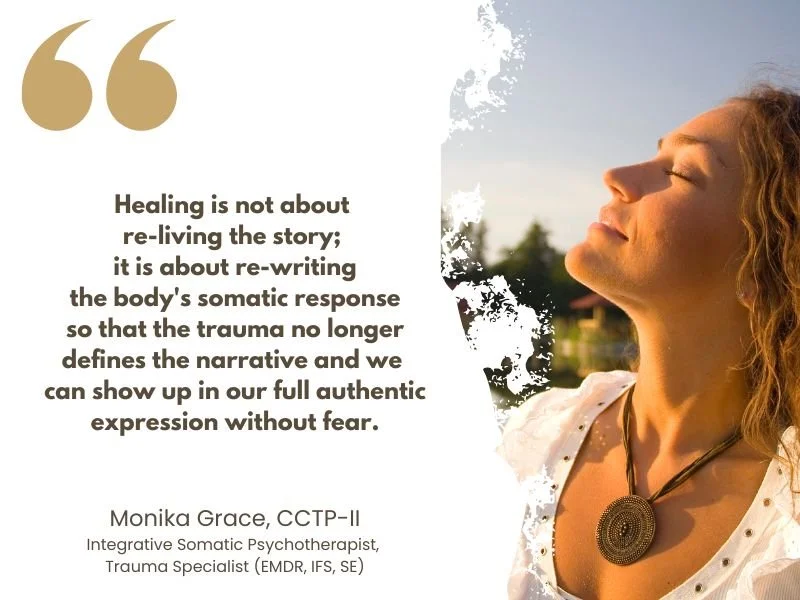
When you’ve lived through bullying, it doesn’t just “end” when the bullying stops. The nervous system, the inner voice, and the sense of self often carry those imprints into adulthood. Healing means addressing each of these areas with care, so you can finally feel safe, confident, and free again. Here’s what needs to heal:
Re-establishing safety in the body – teaching nervous system regulation. Bullying teaches the body to stay on guard, heart racing, shoulders tense, breath shallow. Healing begins with calming the nervous system so your body learns: “I’m safe now.”
👉 Example: Instead of freezing in social situations, you feel grounded, breathe easily, and can connect without panic.Rebuilding self-worth – shifting internalized bully voice to self-compassion. The bully’s voice often becomes your inner critic. Healing means shifting from internalized shame and self-blame to self-compassion and self-acceptance.
👉 Example: Where you once thought, “I’m not good enough,” you now hear, “I’m worthy, just as I am.”Processing stored trauma – releasing freeze, fight, flight patterns somatically. Bullying often leaves fight, flight, or freeze patterns trapped in the body. Somatic healing helps release that stuck energy so you’re not reliving the past in your present.
👉 Example: Instead of shutting down when challenged, you can speak up clearly and calmly.Rewiring core beliefs – and the view of Self, other and the world around us. Trauma plants false beliefs like “I don’t belong” or “I’ll always be rejected by others.” Healing allows you to create new, supportive beliefs and stand in the front of others with confidence.
👉 Example: “I am safe. I belong. I am enough.”Strengthening authentic identity – allowing child to express true self. Bullying often forces kids to hide their real selves to avoid being targeted. Healing means reconnecting with your true self, your voice, your creativity, your uniqueness.
👉 Example: You stop people-pleasing and start living as the real you.Rebuilding trust in relationships – safe, nurturing connections. When others hurt or humiliated you, it can feel impossible to trust again. Healing allows you to experience safe, nurturing connections where you can relax and be seen.
👉 Example: You stop waiting for rejection and instead welcome genuine friendships and love.Supporting performance resilience – helping them feel safe in visibility. Bullying often creates fear of visibility, of speaking up, being noticed, or standing out. Healing strengthens your capacity to be seen and celebrated without fear.
👉 Example: You feel confident giving a presentation, sharing your work, or posting online without spiraling into self-doubt.
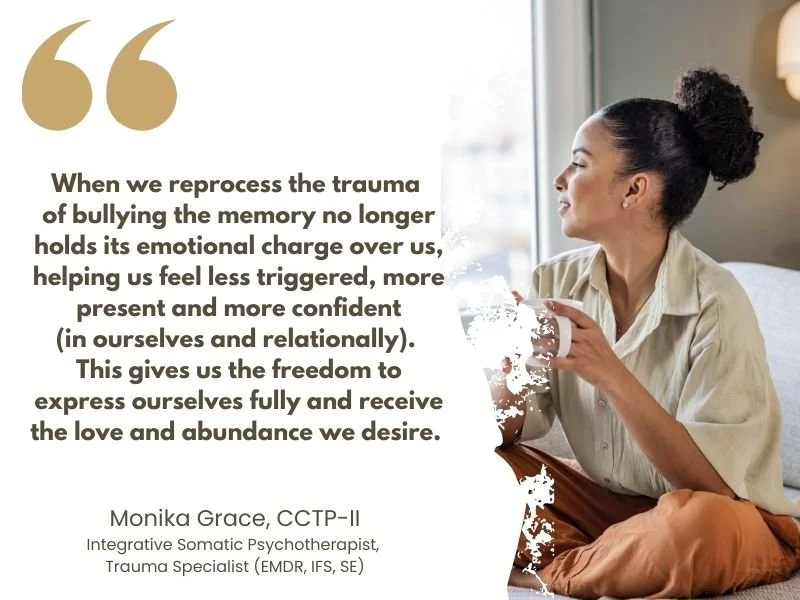
Healing from bullying trauma is not about “forgetting the past.” It’s about releasing its grip on your body, mind, and identity so you can step into the life, love, and confidence you deserve.
10 Questions Parents Can Ask Their Child To Spot Bullying Early And Stop It
“When you think about school, what feelings come up in your body?”
“Do you ever feel like kids treat you in a way that makes you sad or scared?”
“What do you wish your teachers or friends understood about you?”
“When was the last time you felt left out or embarrassed?”
“Do you feel safe to be yourself with your friends?”
“What’s the hardest part of being around other kids?”
“If your feelings had a color, what color would they be right now?”
“Do you ever feel like something is wrong with you? When?”
“Who makes you feel safest, and why?”
“What do you wish I (or we, your parents) understood better about what it’s like to be you?”
Conclusion
Bullying is not a passing childhood experience, it’s a trauma that shapes the nervous system, identity, and self-worth. For children who were bullied healing means more than “toughening up.” It requires restoring safety in the body, rebuilding trust, and re-establishing a healthy sense of self.
Parents who recognize the signs, validate their child’s pain, and seek trauma-informed support give their children the chance not just to recover, but to thrive.
Your Next Step: Healing with Support
If you were bullied as a child, the trauma from those experiences can linger long into adulthood, often unconsciously shaping your thoughts, emotions, and behaviors. Unprocessed bullying trauma can show up as chronic anxiety, hypervigilance, low self-esteem, perfectionism, fear of rejection, difficulty trusting others, and challenges in relationships or at work. You may notice a constant inner critic, a sense of being “too much” or not enough, or automatic fight, flight, or freeze responses in situations that feel even mildly threatening. These patterns are your nervous system and identity carrying the unhealed imprints of childhood pain, signaling that the body and mind still need safety, validation, and restoration.
If you or someone you love is suffering from the impact of bullying, please know this: healing is absolutely possible. The nervous system can be rewired, trauma patterns released, and a child (or the inner child within an adult) can reclaim safety, self-trust, and self-worth.
As a somatic trauma therapist, I’ve witnessed how approaches like Somatic Experiencing, EMDR, IFS, and attachment-based therapies can help release the survival responses (fight, flight, freeze, or fawn) that bullying imprints in the body and the nervous system. Together, we work to transform the core beliefs of “I’m not safe,” “I don’t belong,” or “I’m not enough” into an embodied knowing that:
✨ “I am safe.”
✨ “I am worthy of love and respect.”
✨ “I belong.”
You don’t have to walk this path alone. If you’re ready to begin, I invite you to book a private session with me where we’ll create a tailored healing plan for you. Let’s explore how to help you heal, release the deep imprints of bullying trauma and open up to more love, abundance and safety in your life and relationships. Book your Free Discovery call >> click here
Downlaod your Free Checklist
If you’d like to start gently, you can download my free checklist: “10 Somatic Signs Your Child May Be Carrying Hidden Trauma From Bullying (and What to Do Next).”
This guide will help you spot subtle nervous system cues, understand what they really mean, and take the first steps to supporting recovery.
With love and belief in your healing, growth, and reclamation of your right to thrive as your whole self.
Warmly,
Monika Grace, CCTP-II
Integrative Somatic Psychotherapist [Psych-k, EMDR, IFS, SE]
Certified Clinical Trauma Professional
Disclaimer: The content of this blog post is for informational and educational purposes only. It is not intended to diagnose or treat any medical or psychological condition. If you recognize yourself in the experiences described above, please consult a qualified mental health professional who specializes in complex trauma healing. Self-diagnosis can be helpful for insight, but professional evaluation is essential for accurate diagnosis and appropriate treatment.